https://docs.google.com/presentation/d/1vV8cj_rG1Re7CHGeI2OcEXLRjBFoI4qWwYrzjEU-hu8/edit?usp=sharing
Above is my ted talk link.
i learned a lot through out this project. And I'm defiantly going to let my team mates know how to prevent this injury. I would hate for it to happen to any of them.
so if i see any of their knees dive in or any of the signs of an ACL tear or even meniscus.
Thursday, May 19, 2016

Before when my knee would lock up and i would say my trainer would play with it. he was doing the Lachman test.
Lachman Test (most sensitive ACL test)
- 98% accurate in predicting an ACL injury.more infohttp://orthosurg.ucsf.edu/patient-care/divisions/sports-medicine/conditions/knee/anterior-cruciate-ligament-injury-acl/
http://healthresearchfunding.org/acl-injury-statistics/
This website above shows some facts about ACL injuries.
And heres just a couple interesting facts from the page.
3. In a given year, there can be anywhere from 150, 000 to 200, 000 ACL injuries reported.
7. The top sports in which an ACL injury is a possibility are basketball, soccer, skiing, and football. What do all of those sports have in common? All of them make demands on the knees.
8. Although more ACL injuries occur in sports played by men, women are actually considered to be at a higher risk for ACL injuries.
This website above shows some facts about ACL injuries.
And heres just a couple interesting facts from the page.
3. In a given year, there can be anywhere from 150, 000 to 200, 000 ACL injuries reported.
7. The top sports in which an ACL injury is a possibility are basketball, soccer, skiing, and football. What do all of those sports have in common? All of them make demands on the knees.
8. Although more ACL injuries occur in sports played by men, women are actually considered to be at a higher risk for ACL injuries.
Wednesday, May 11, 2016
For this assignment we had to create something.
At first I wanted to make a kit to help someone right after surgery on their knee.
I had trouble getting dressed, especially getting them over my legs carefully.
along with having a comfortable sleeping position with my leg elevated. Sometimes just getting up was a struggle.
Really the kit you would need is just someone there taking care of you and helping. Maybe for sleeping situation get something a little more stable, other than just 6 pillows stacked on each other.
For me sleeping was uncomfortable because I always sleep on my stomach and I shift to each side.
So the new thing i'm creating is just a prevention to knee injuries. A how to prevent injuries of your knee.
At first I wanted to make a kit to help someone right after surgery on their knee.
I had trouble getting dressed, especially getting them over my legs carefully.
along with having a comfortable sleeping position with my leg elevated. Sometimes just getting up was a struggle.
Really the kit you would need is just someone there taking care of you and helping. Maybe for sleeping situation get something a little more stable, other than just 6 pillows stacked on each other.
For me sleeping was uncomfortable because I always sleep on my stomach and I shift to each side.
So the new thing i'm creating is just a prevention to knee injuries. A how to prevent injuries of your knee.
Complete Guide To Sports Injuries
MCL (page 226)
Signs & symptoms
-locking of the knee joint
-Giving way of the knee
My knee would all the time either give out or lock up while playing.
Causes
-twisting or violent muscles contraction
That I remember I didn't twist I jumped and landed. My knee might of twisted from giving out but.
Risk increase
-poor muscle conditioning
-nutrition
I'm pretty sure my muscles were good, along with my nutrition.
Possible complication with surgery
-Arthritic
-proneness to repeated knee injury
ACL (page 234)
-Violently over stretched
-Feeling of popping or tearing inside the knee
Cause
-Stress on ligament
-common in jumping sports
- often land on the side of the foot
Now in December when i landed i remember hearing a pop.
so part of me is kinda thinking that maybe I partially tore the ACL along with my MCL.
MCL (page 226)
Signs & symptoms
-locking of the knee joint
-Giving way of the knee
My knee would all the time either give out or lock up while playing.
Causes
-twisting or violent muscles contraction
That I remember I didn't twist I jumped and landed. My knee might of twisted from giving out but.
Risk increase
-poor muscle conditioning
-nutrition
I'm pretty sure my muscles were good, along with my nutrition.
Possible complication with surgery
-Arthritic
-proneness to repeated knee injury
ACL (page 234)
-Violently over stretched
-Feeling of popping or tearing inside the knee
Cause
-Stress on ligament
-common in jumping sports
- often land on the side of the foot
Now in December when i landed i remember hearing a pop.
so part of me is kinda thinking that maybe I partially tore the ACL along with my MCL.
Friday, April 29, 2016
I recently got contacted by a college coach. He said he saw me in another girls videos, and liked what he saw. When i talked to him on the phone he said he knew about my injury, but was still very interested and willing to work with it.
so i went down to one of their practices to meet them, and get a feel of the environment and school. the coaches seemed like very good, fun guys.
I didn't know what to think, i was definitely excited that someone is still willing to work with me and my knee. But I'm just worried i won't get to the level that i need to be in college. Along with Re-tearing my knee. Its all just unexpected, i never really thought i would get the opportunity. But I'm signing and they are going to red shirt me for the fall(i won't play just practice) and then in the spring time they will pay for room and tuition. Im excited and nervous at the same time, but i won't be alone, i will know about 6 girls that I've played with.

The last videos about the Bridge-Enhanced ACL Repair definitely got me thinking about if I would have had the Bridge-Enhanced surgery where would I be in my recovery. How well I would be doing, would I be able to go to my practices and actually be practicing and not just shagging balls.
April 27th was 3 months(13 weeks) after my operation, and as of now I can run, jump, but as long as I'm going straight, I still can't do any cutting or actual playing.
Last week my swim team started practice and since I'm coaching too, I haven't been getting in everyday. But oh man did it feel good when I did go in. I wish that there would of been heated pools available to me when I first started my recovery because my legs were surely burning after the first time.
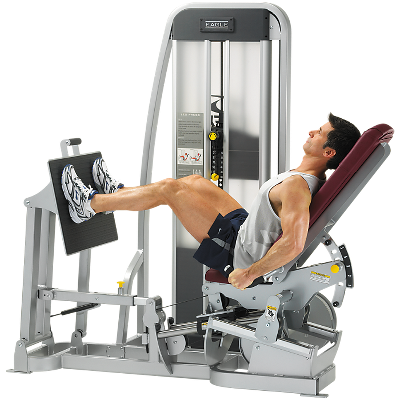
Yesterday at my physical therapy I used the leg press machine. They set the weight to 90lbs, with my injured leg I did 4 leg presses. With my right healthy leg, I was able to 30 leg presses.....
I just need more time in my days, I have school everyday, then since swimming has started that takes up my after school time. And weekends I always have things going on.
I need to start going to the gym and strengthen my legs back up.
April 27th was 3 months(13 weeks) after my operation, and as of now I can run, jump, but as long as I'm going straight, I still can't do any cutting or actual playing.
Last week my swim team started practice and since I'm coaching too, I haven't been getting in everyday. But oh man did it feel good when I did go in. I wish that there would of been heated pools available to me when I first started my recovery because my legs were surely burning after the first time.
Yesterday at my physical therapy I used the leg press machine. They set the weight to 90lbs, with my injured leg I did 4 leg presses. With my right healthy leg, I was able to 30 leg presses.....
I just need more time in my days, I have school everyday, then since swimming has started that takes up my after school time. And weekends I always have things going on.
I need to start going to the gym and strengthen my legs back up.
Wednesday, April 27, 2016
-In the United States, 20,000 to 80,000 high school female athletes experience ACL injuries each year, with most in soccer and basketball.
-Straight-ahead sports like jogging, swimming, and biking place little stress on the ACL. Sports such as soccer, basketball and volleyball that involve cutting, planting and changing direction, in which the ACL plays a vital role, put athletes, particularly females, at greatest risk of ACL injury.'
-Less than a third of all reported ACL injuries involve contact from an outside force such as an opposing player.
One-step/stop deceleration
Cutting movements
Sudden change in direction
Landing from a jump with inadequate knee and hip flexion (at or near full extension)
Lapse of concentration (resulting from unanticipated change in the direction of the play)
-Overall, girls are 8 times more likely to suffer an ACL injury than boys.
video to help prevent ACL tears.
Read more: http://www.momsteam.com/health-safety/muscles-joints-bones/knee/acl-injuries-in-female-athletes#ixzz45pXcenS1
-Straight-ahead sports like jogging, swimming, and biking place little stress on the ACL. Sports such as soccer, basketball and volleyball that involve cutting, planting and changing direction, in which the ACL plays a vital role, put athletes, particularly females, at greatest risk of ACL injury.'
-Less than a third of all reported ACL injuries involve contact from an outside force such as an opposing player.
video to help prevent ACL tears.
Read more: http://www.momsteam.com/health-safety/muscles-joints-bones/knee/acl-injuries-in-female-athletes#ixzz45pXcenS1
Bridge-Enhanced ACL Repair
https://m.facebook.com/story.php?story_fbid=987515817998042&id=100002189003908
(video)
http://www.themichelicenter.com/revolutionizing-the-acl-surgery/
(Q&A) written in May 2015
http://www.childrenshospital.org/centers-and-services/anterior-cruciate-ligament-program/bridge-enhanced-acl-repair-trial
http://www.childrenshospital.org/conditions-and-treatments/conditions/anterior-cruciate-ligament-acl-injury/research-and-clinical-trials

https://www.childrenshospital.org/~/media/centers-and-services/departments-and-divisions/sports-medicine-division/sports-medicine-pdfs/bear_study_trial_brochure.ashx?la=en
power point
https://m.facebook.com/story.php?story_fbid=987515817998042&id=100002189003908
(video)
http://www.themichelicenter.com/revolutionizing-the-acl-surgery/
(Q&A) written in May 2015
http://www.childrenshospital.org/centers-and-services/anterior-cruciate-ligament-program/bridge-enhanced-acl-repair-trial
 |
| Fig. 1 - ACL tear. Without treatment, healing does not occur.
Fig. 2 - ACL reconstruction. The torn ACL is removed and
replaced with a graft of the tendon. Fig. 3 - ACL repair. The ACL is encouraged to heal using stitches and a sponge instead of a tendon graft. |
http://www.childrenshospital.org/conditions-and-treatments/conditions/anterior-cruciate-ligament-acl-injury/research-and-clinical-trials
• Fig. 1 ACL is torn
• Fig. 2 Healing does not occur when blood clot dissolves in joint fluid
• Fig. 3 Collagen and blood plasma mixture is injected
• Fig. 4 ACL heals successfully
• Fig. 2 Healing does not occur when blood clot dissolves in joint fluid
• Fig. 3 Collagen and blood plasma mixture is injected
• Fig. 4 ACL heals successfully
https://www.childrenshospital.org/~/media/centers-and-services/departments-and-divisions/sports-medicine-division/sports-medicine-pdfs/bear_study_trial_brochure.ashx?la=en
power point
Although most patients are able to return to sports, the ACL re-tear rate hovers near
20 percent. Up to 80 percent of patients develop arthritis 15 to 20 years after surgery.
These videos were very interesting to watch.
These videos were very interesting to watch.
Wednesday, March 16, 2016
Proposal
Proposal
http://www.huffingtonpost.com/2014/11/18/high-school-athletic-trainers_n_6146672.html
http://www.nata.org/press-release/031209/athletic-trainers-fill-necessary-niche-secondary-schools
(some stats on availability of Athletic trainers in the U.S)
Reading the information above in the URLs was scary to read, so amazed that ONLY 42% of high schools have Athletic trainers available. That in my personal view should be so much higher.
As student Athlete I don't know where i would be if i didn't have my AT available to me. i have had many ankle sprains, a broken arm, partially torn muscle, and recently a torn ACL and Meniscus. for my ankles, he helped me strengthen and recover faster with everything he did to help, with out him i would of missed more games for the season. For my knee he was there from the start helping me, making sure i keep my strength up before surgery and even after still allowing me to come in after school to rehab even though I'm not in a sport and have physical therapy in the mornings. With out having him available to me, i wouldn't be as far as i am now with my knee, i am so much further than an average person with this injury.
I'm not sure if its just me or other athletes are like this, but I always listen to what is wrong with the other athletes when they come into the training room. Its very interesting hearing how they got hurt and seeing the difference in every sport, every injury. I think i like to know about the different injury because in club swim and soccer there's not trainers with us, so it kind of prepares me a little.
My experiences so far with PT & AT are giving me an idea if a career in one of those is a good idea or not. I'm still not 100% sure but I have an idea and hopefully by the end of all my research i will have a better idea and know whether its a right career path for me or not. Along with knowing my career path, i hope to be able to run and start playing soccer again.
I will need to talk to both my AT & PT for what they like and dislike. what kind of schooling and requirements they went through, along with other questions. I would also like to learn ways to prevent specific injuries. Along with knee injury statistics, most common in what sport, gender, etc. For the physical state of my knee i hope to be back to 75% of my playing ability by the end of this year, and going from there.
http://www.huffingtonpost.com/2014/11/18/high-school-athletic-trainers_n_6146672.html
http://www.nata.org/press-release/031209/athletic-trainers-fill-necessary-niche-secondary-schools
(some stats on availability of Athletic trainers in the U.S)
Reading the information above in the URLs was scary to read, so amazed that ONLY 42% of high schools have Athletic trainers available. That in my personal view should be so much higher.
As student Athlete I don't know where i would be if i didn't have my AT available to me. i have had many ankle sprains, a broken arm, partially torn muscle, and recently a torn ACL and Meniscus. for my ankles, he helped me strengthen and recover faster with everything he did to help, with out him i would of missed more games for the season. For my knee he was there from the start helping me, making sure i keep my strength up before surgery and even after still allowing me to come in after school to rehab even though I'm not in a sport and have physical therapy in the mornings. With out having him available to me, i wouldn't be as far as i am now with my knee, i am so much further than an average person with this injury.
I'm not sure if its just me or other athletes are like this, but I always listen to what is wrong with the other athletes when they come into the training room. Its very interesting hearing how they got hurt and seeing the difference in every sport, every injury. I think i like to know about the different injury because in club swim and soccer there's not trainers with us, so it kind of prepares me a little.
My experiences so far with PT & AT are giving me an idea if a career in one of those is a good idea or not. I'm still not 100% sure but I have an idea and hopefully by the end of all my research i will have a better idea and know whether its a right career path for me or not. Along with knowing my career path, i hope to be able to run and start playing soccer again.
I will need to talk to both my AT & PT for what they like and dislike. what kind of schooling and requirements they went through, along with other questions. I would also like to learn ways to prevent specific injuries. Along with knee injury statistics, most common in what sport, gender, etc. For the physical state of my knee i hope to be back to 75% of my playing ability by the end of this year, and going from there.
 |
| Shifting side to side |
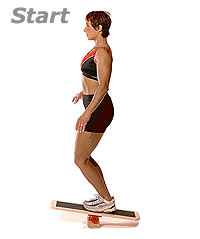 |
| Shifting forward and backwards |
Balance
Start with standing on one leg, looking side to side, slowly though.
Then stand on both feet, one foot straight in front of the other, and again looking side to side slowly.
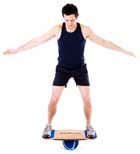
Then standing on a balance board, shifting your weight side to side, and forward and backwards.
After those two you stay in the middle balancing your weight.
Standing on the Bosu Ball, I shift my weight side to side and forward and backwards. Then still on the Bosu Ball I do mini squats


Trampoline Toss
Standing on one leg, slight bend in the leg, throwing a small medicine ball to the trampoline and catching it.
- facing the trampoline, and then turning, so each side will be facing the trampoline.
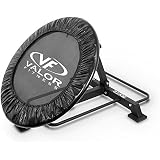 |
| Trampoline to throw at |
Tips
- keep everything steady
- don't go fast
- keep a slight bend in your knee.
Clam exercise
This exercise is very important because weakness in the hips and gluteus causes downward stress into the knee.
Muscles its working
Gluteus Medius
Gluteus Minimus
Tensor Fascia Latae
Sartorius
Lie on your side. Rest your head on your arm
Bend hips to about 45 degrees and bend your knees at 90 degrees. Make sure one hip is lying above the other.
Separate your knees, but keeping your feet together.
Repeat for 30 seconds on each leg. If done correctly you should feel the muscles around the back of the hip bone (gluteus medius and minimus) working hard.
Focus on not allowing the alignment of the body to be disrupted with leg movement.
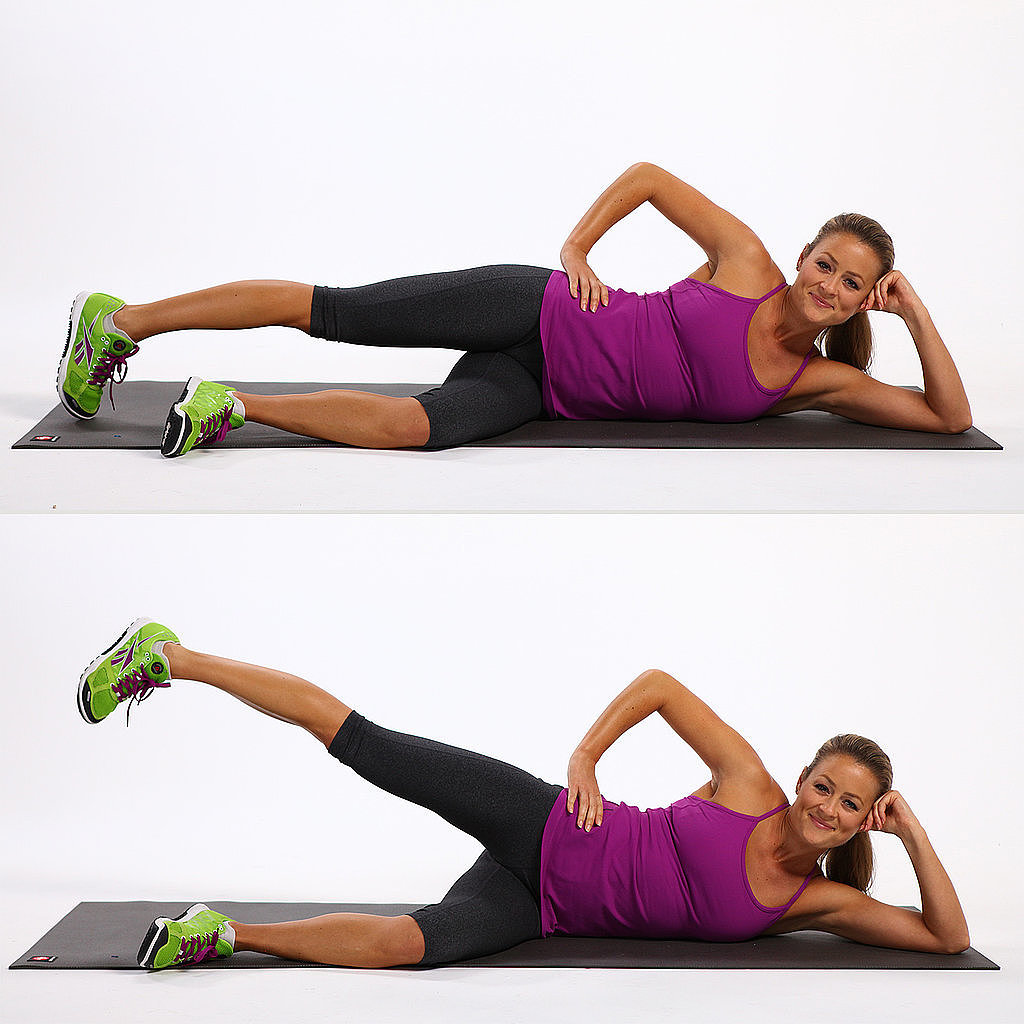
(See Image Below)

Reverse clam
Same as regular clam just you keep your knees touching, and separate you feet
(See Image Below)

Hip Abduction
Lift the top leg up to about 30 degrees, keeping the foot parallel tothe ground and the thigh aligned with the body.
Runners-Side Lying
(See video)
Is like running horizontal (Fat Amy's favorite) but only one leg. The way i see it, its more like doing high knees.
So for all these different Clams you are on your side still hips even, knees bent at a 90 degree angle.
https://www.youtube.com/watch?v=4DhXMOTlr70
Tips
You want to make sure you are doing this exercise on each side, and doing 30 seconds for each.
Make sure you keep your hip parallel.
You should be feeling the burn sensation on the side of your hip and bottom.
This exercise is probably my favorite, I can feel my muscles working hard and strengthening. I was so sore after the first time I did them, Being sore made feel good, I knew I was working hard.
http://www.sportsinjuryclinic.net/rehabilitation-exercises/hip-groin-exercises/clam
This exercise is very important because weakness in the hips and gluteus causes downward stress into the knee.
- Improves the way you walk, stabilizes the pelvis when your walk
- Strengthens your ankles
- strengthens your hips and Gluteus Muscles
Muscles its working
Reverse clam
Same as regular clam just you keep your knees touching, and separate you feet
(See Image Below)
Hip Abduction
Lift the top leg up to about 30 degrees, keeping the foot parallel tothe ground and the thigh aligned with the body.
Runners-Side Lying
(See video)
Is like running horizontal (Fat Amy's favorite) but only one leg. The way i see it, its more like doing high knees.
So for all these different Clams you are on your side still hips even, knees bent at a 90 degree angle.
https://www.youtube.com/watch?v=4DhXMOTlr70
Tips
You want to make sure you are doing this exercise on each side, and doing 30 seconds for each.
Make sure you keep your hip parallel.
You should be feeling the burn sensation on the side of your hip and bottom.
This exercise is probably my favorite, I can feel my muscles working hard and strengthening. I was so sore after the first time I did them, Being sore made feel good, I knew I was working hard.
http://www.sportsinjuryclinic.net/rehabilitation-exercises/hip-groin-exercises/clam
Stretches
-First stretch is the calf stretch. I stand on a board that is inclined, and I lean forward.
I hold the stretch for three 30 second intervals.
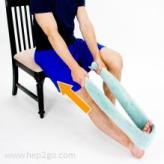
- calf stretch. lie on your back and place a belt under your forefoot. Pull the belt up slowly until you feel a stretch.
-Hamstring stretch. I sit on a chair, put my heel on a small bench, and pull my foot up.
I sit up straight and lean forward until you feel a stretch. hold the position for 30 seconds, repeat three times total.
-Butt crack stretch. For me this stretches my hamstring and calf. You sit on a table. But one leg up on the table the other leg hanging off the table, while sitting up straight.Feeling the stretch on the hamstring thats up on the table.
-Quad stretch. since I cant do flamingos, this stretch works very well stretching my quad. I sit on a table with one leg up and the other hanging off. Just like the butt crack stretch but you lay back on the table, instead of sitting up straight.Should feel the stretch on the leg that's hanging down.


-First stretch is the calf stretch. I stand on a board that is inclined, and I lean forward.
I hold the stretch for three 30 second intervals.
- calf stretch. lie on your back and place a belt under your forefoot. Pull the belt up slowly until you feel a stretch.
-Hamstring stretch. I sit on a chair, put my heel on a small bench, and pull my foot up.
I sit up straight and lean forward until you feel a stretch. hold the position for 30 seconds, repeat three times total.
-Butt crack stretch. For me this stretches my hamstring and calf. You sit on a table. But one leg up on the table the other leg hanging off the table, while sitting up straight.Feeling the stretch on the hamstring thats up on the table.
-Quad stretch. since I cant do flamingos, this stretch works very well stretching my quad. I sit on a table with one leg up and the other hanging off. Just like the butt crack stretch but you lay back on the table, instead of sitting up straight.Should feel the stretch on the leg that's hanging down.
Calf
- Standing plantar flexion (calf raises). stand up straight and raise on the tip of your toes, lower yourself back down and repeat.
- You can do one legged Calf Raises as well once you feel your ready.
- Helps with Balance
- Strengthens your Ankle

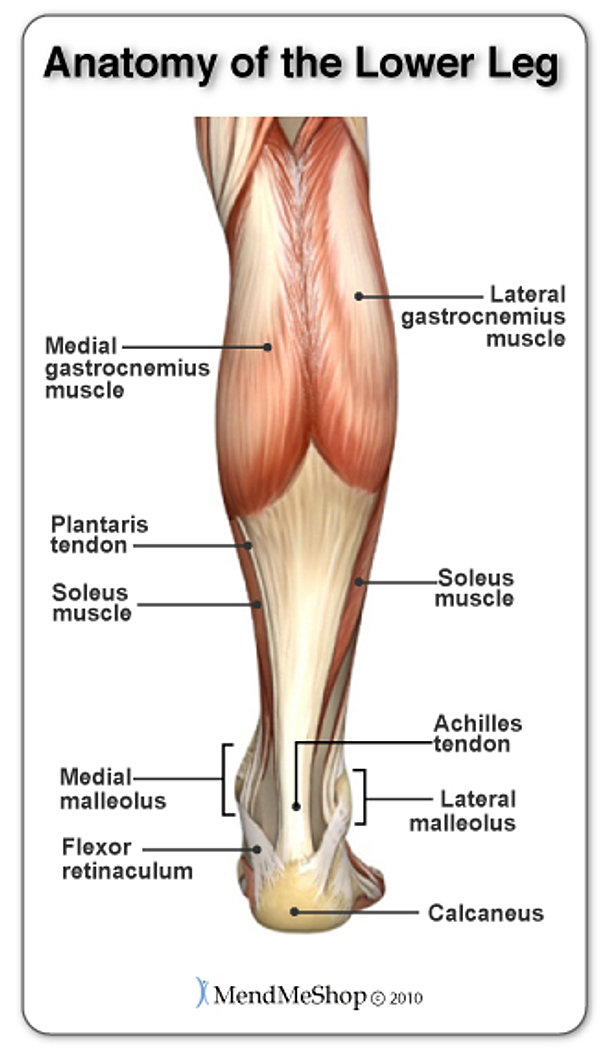
There aren't as many Muscles in the Calf as there is in the Thigh, that's why my calf as came back pretty well. They still aren't 100% there but further than my Thigh which is still doing good.
For me the Calf raises were important because i had pretty big and nice calves.
- Standing plantar flexion (calf raises). stand up straight and raise on the tip of your toes, lower yourself back down and repeat.
- You can do one legged Calf Raises as well once you feel your ready.
- Helps with Balance
- Strengthens your Ankle
There aren't as many Muscles in the Calf as there is in the Thigh, that's why my calf as came back pretty well. They still aren't 100% there but further than my Thigh which is still doing good.
For me the Calf raises were important because i had pretty big and nice calves.

Thigh
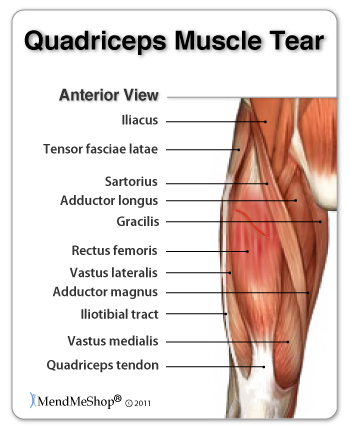
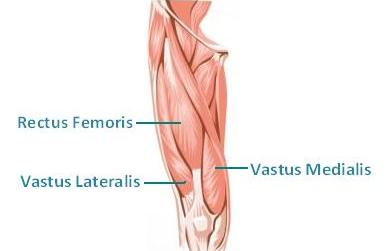
-Isometric quadriceps(quad sets). you lay on your back with your leg extended, Tighten the quadriceps muscle on the front of your thighs by trying to push the knee downward. so in other words you flex your quad and hold it.
-TA activation, active SLR. ( straight leg raises)lie on your back with your leg straight. you slightly lift one leg (about 6 inches), keeping your leg straight, and bring your leg back down.
Thursday, February 4, 2016
hello, i am Janet, I am a senior in high school at Palo Verde. I have been a starter on the varsity girls soccer team since my freshman year. My last year was going great, we were going strong with an undefeated record of 16 - 0. My stats were good, I was playing hard its my senior year. Although I did have what at the time I thought was a hyper extended knee.
Well on the 15th of January we played Cholla high school, Mr. Sanchez's team. It was a tough game those girls were playing hard. I couldn't play 100% because of my knee but I was in there doing what I could. Well in the second half about 15 minutes in I planted on my leg after kicking the ball up to my forward. My knee gave out and twisted I would say. I immediately knew I was hurt. So I rolled off the field and they had to help walk to the bench. I was already starting to cry because of the pain. When Bart came over to me to check me out, it was hurting he couldn't straighten my knee, he couldn't do some of the things he was able to before when I would tweak it. And before he would move it around, and after it would feel fine, still wasn't 100% but felt better. so when he was moving it and trying to figure it out I was crying because of the pain still. After about 8 minutes of him testing it. He tries to get me to just relax and started to talk to me about my knee. He begins to say that there were symptoms to have it be my ACL and there were signs that didn't really go along with the ACL. But he said we have to treat it like a torn ACl. I basically just fell apart right there and then. My senior year, we were doing great this season, there were college coaches coming to one of our next games, and now its over. Its over for me. It was hard for me to just take in, was not expected at all.
Well that night my sister was in labor for about 20 hours already, so my mom just took me to the birthing center before the game was even over so I could be there for her.We ended up winning the game, and the girls voted me for the KASS award
Since this game was on a Friday night, I had to wait the whole weekend to see a doctor. Monday morning I went into a sports medicine office where the doctor was an ACL expert. I told him what all happened along with hyper extending my knee in December. He didn't mess with it he only more poked and felt around asking where it hurt to the touch. He then began to say that I might of torn my Meniscus. And began to explain that the reason why it would feel better after Bart would move it around is because my Meniscus would flipped and he would flip it back with all the motions. He then told me how he would fix it.
After seeing the doctor on Monday, I got scheduled to get an MRI on Tuesday morning. Went into get the MRI, had to then wait till Thursday morning to see the doctor for the results. Wednesday night we played the defending state champions, we lost 5-2. It was hard just sitting there and watching the girls play. I wanted to go in so bad. On Thursday the doctor comes in and begins to say I have an acute displaced bucket-handle tear of the medial meniscus. Which is what he thought. Along with an acute posteromedial corner of the knee injury, and a small knee joint effusion with diffuse synovitis. Meaning I have a bruise form my bones bumping together and I have swelling in my knee. "And you have a torn ACL" (Acute high grade sprain of the anterior cruciate ligament). After he said that and began telling me how it would be fixed and everything I needed to know.
I then had to go to school and tell my team mates, not only my team mates but my coach.
Well on the 15th of January we played Cholla high school, Mr. Sanchez's team. It was a tough game those girls were playing hard. I couldn't play 100% because of my knee but I was in there doing what I could. Well in the second half about 15 minutes in I planted on my leg after kicking the ball up to my forward. My knee gave out and twisted I would say. I immediately knew I was hurt. So I rolled off the field and they had to help walk to the bench. I was already starting to cry because of the pain. When Bart came over to me to check me out, it was hurting he couldn't straighten my knee, he couldn't do some of the things he was able to before when I would tweak it. And before he would move it around, and after it would feel fine, still wasn't 100% but felt better. so when he was moving it and trying to figure it out I was crying because of the pain still. After about 8 minutes of him testing it. He tries to get me to just relax and started to talk to me about my knee. He begins to say that there were symptoms to have it be my ACL and there were signs that didn't really go along with the ACL. But he said we have to treat it like a torn ACl. I basically just fell apart right there and then. My senior year, we were doing great this season, there were college coaches coming to one of our next games, and now its over. Its over for me. It was hard for me to just take in, was not expected at all.
Well that night my sister was in labor for about 20 hours already, so my mom just took me to the birthing center before the game was even over so I could be there for her.We ended up winning the game, and the girls voted me for the KASS award
Since this game was on a Friday night, I had to wait the whole weekend to see a doctor. Monday morning I went into a sports medicine office where the doctor was an ACL expert. I told him what all happened along with hyper extending my knee in December. He didn't mess with it he only more poked and felt around asking where it hurt to the touch. He then began to say that I might of torn my Meniscus. And began to explain that the reason why it would feel better after Bart would move it around is because my Meniscus would flipped and he would flip it back with all the motions. He then told me how he would fix it.
After seeing the doctor on Monday, I got scheduled to get an MRI on Tuesday morning. Went into get the MRI, had to then wait till Thursday morning to see the doctor for the results. Wednesday night we played the defending state champions, we lost 5-2. It was hard just sitting there and watching the girls play. I wanted to go in so bad. On Thursday the doctor comes in and begins to say I have an acute displaced bucket-handle tear of the medial meniscus. Which is what he thought. Along with an acute posteromedial corner of the knee injury, and a small knee joint effusion with diffuse synovitis. Meaning I have a bruise form my bones bumping together and I have swelling in my knee. "And you have a torn ACL" (Acute high grade sprain of the anterior cruciate ligament). After he said that and began telling me how it would be fixed and everything I needed to know.
I then had to go to school and tell my team mates, not only my team mates but my coach.
Subscribe to:
Posts (Atom)